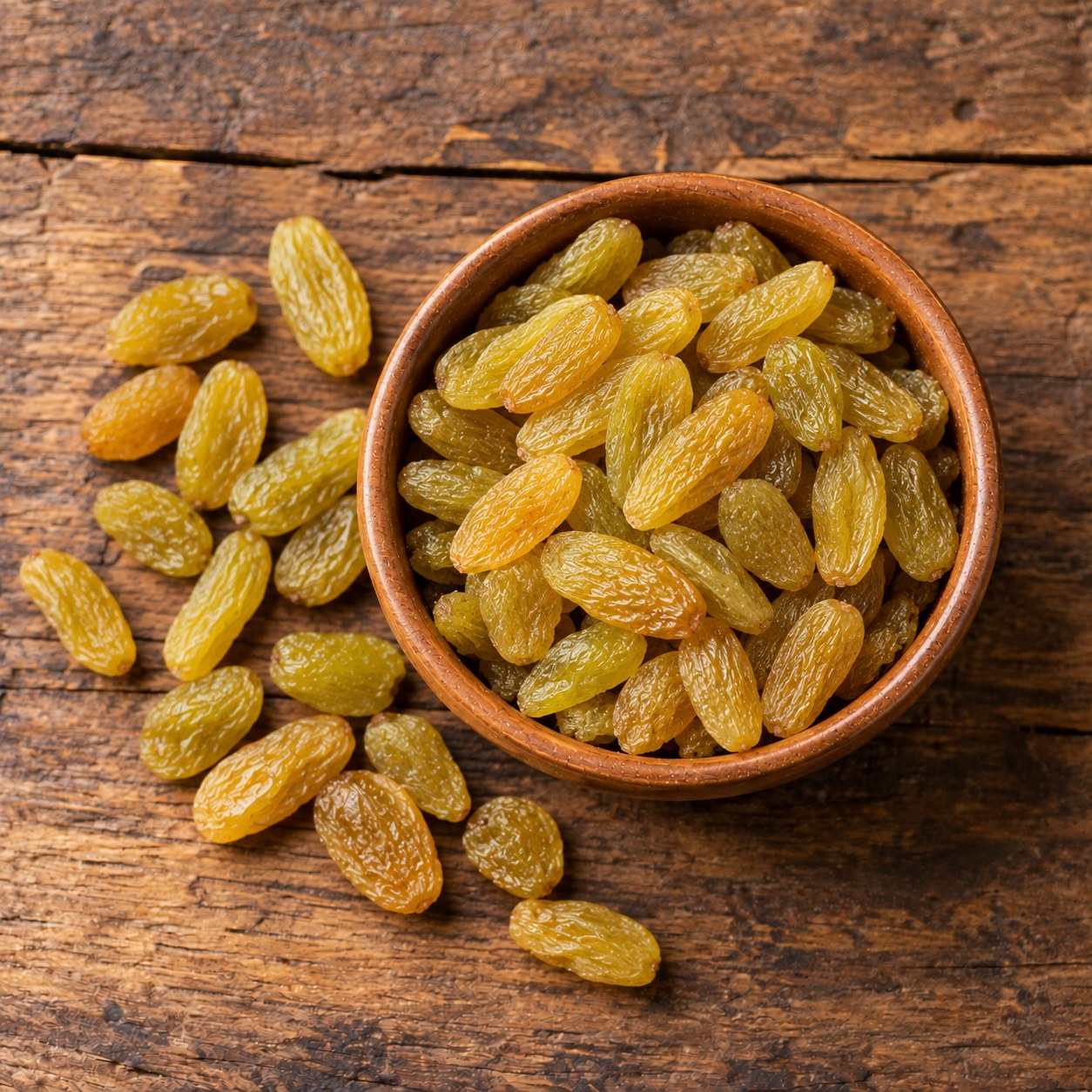
In short: Most commercial raisins are treated with sulphur dioxide (SO₂) during drying to preserve colour and extend shelf life. Our grapes are not — they're sun-dried naturally, which changes their colour, texture and how your body processes them.
Why sulphur is used commercially
Sulphur dioxide is a preservative and anti-browning agent. Treating grapes with it before drying keeps them golden or light brown instead of darkening, slows mould growth, and extends shelf life significantly — useful for large-scale, long-distance commercial raisin production.
What happens without it
Grapes dried without sulphur naturally oxidise and darken as they lose moisture in the sun — which is why our Black Panneer Seeded Dry Grapes are dark, almost black, rather than golden. The trade-off is a shorter shelf life and more variation batch to batch, in exchange for no added chemical residue.
Does sulphur matter for health?
Sulphites are permitted food additives within regulatory limits, but some people are sensitive to them — particularly those with asthma or sulphite sensitivity, who can react to residual SO₂ in dried fruit. Choosing unsulphured dried fruit removes this variable entirely.
The short answer
Sulphur-treated raisins stay light-coloured and last longer on a shelf; naturally sun-dried grapes like ours darken, taste different, and carry no added sulphur — a deliberate trade-off we make for a more natural product.