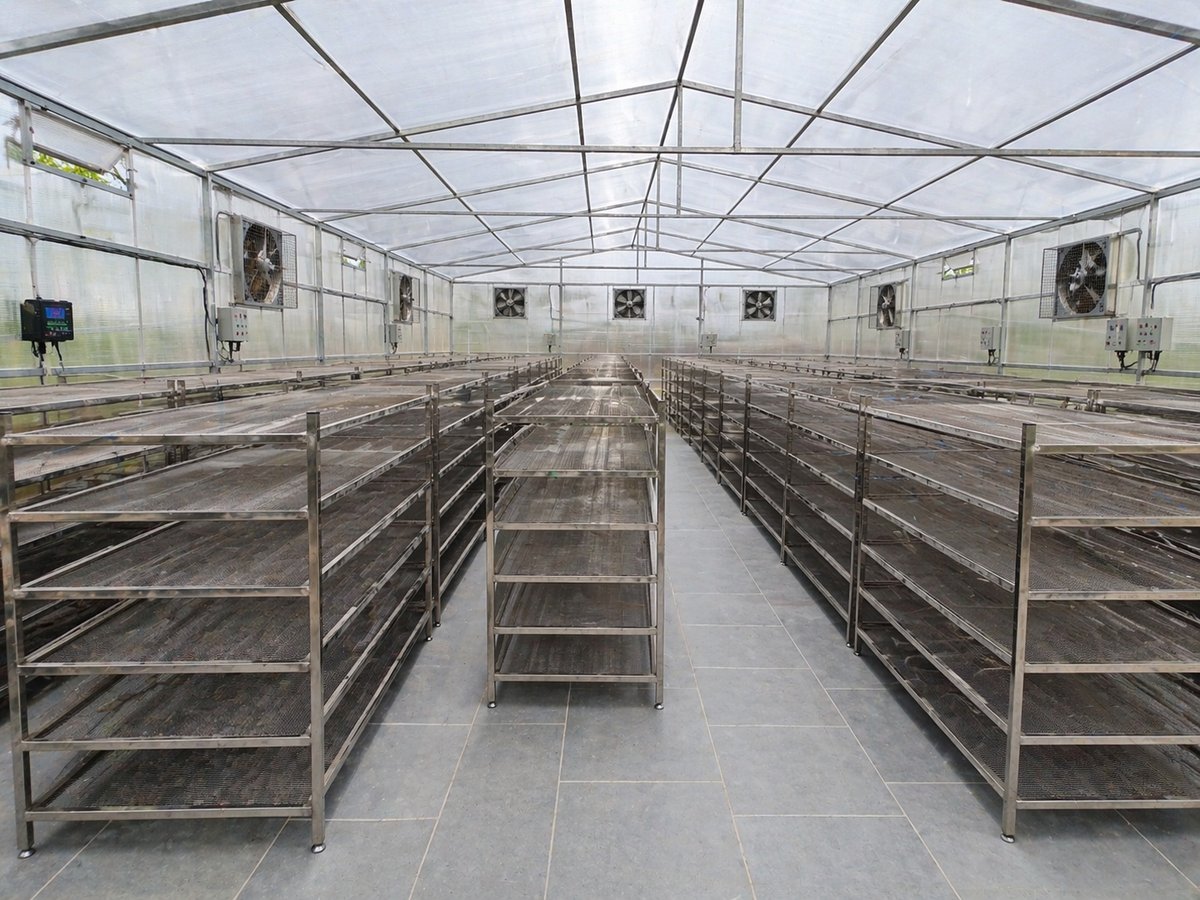
In short: We're building a dedicated 1,100 sq ft polycarbonate solar-drying greenhouse on our farm, under a Tamil Nadu Horticulture Department subsidy scheme. The structure and flooring are built. Several more steps — racks, climate control, cold storage, a packaging line — are still in progress. We'd rather tell you exactly where things stand than round up.
What's actually built
The outer polycarbonate greenhouse structure and the concrete floor are complete. This gives us a weatherproof, pest-protected environment for solar drying that's a real step up from drying grapes out in the open, which is how it was done for generations before this.
What's still pending
We're honest that this facility isn't finished. Still to come: Kadapa stone flooring for better hygiene and heat management, stainless steel drying racks, exhaust fans and active temperature control, a backup heater for low-sun days, the remaining electrical work, cold storage for finished product, a juice extraction machine, a packaging line, and a sorting machine. Each of these is a real, costed line item in how we're using the funding we're raising.
Why this matters for capacity
Right now, the facility can handle roughly 750–900 kg per drying batch. Once the pending infrastructure above is in place, we're targeting 3,000–5,000 kg per batch — the difference between a family-scale operation and one that can also take on processing work for other farmers in the Theni area.
The short answer
The facility is real and partly built, not a rendering or a promise. The structure stands today; the equipment that turns it into a high-capacity, white-label-ready processing unit is what the next phase of funding goes toward.